🏆 Amazon PPC Experts Delivering Measurable Growth · Revenue-Focused Campaigns →
Amazon DSP advertising management is the discipline of planning, launching, optimizing and measuring programmatic display, video, audio and streaming TV campaigns through Amazon’s demand-side platform. At Amazon PPC Expert, we are a full-service Amazon DSP agency with more than ten years of hands-on Amazon advertising experience. We run Amazon DSP campaign management for sellers, vendors and non-endemic brands who want to reach high-intent shoppers across Amazon, Fire TV, Prime Video, IMDb, Twitch and thousands of third-party publisher sites, and who want every impression tied back to a business outcome.
If you already run Sponsored Products, Sponsored Brands and Sponsored Display and feel your growth is flattening, DSP is usually the next lever. If you have never touched DSP because the interface looks intimidating, the minimums look steep or the reporting looks confusing, this page explains exactly how the platform works, what a competent Amazon DSP management service should do for you, and how we run it.
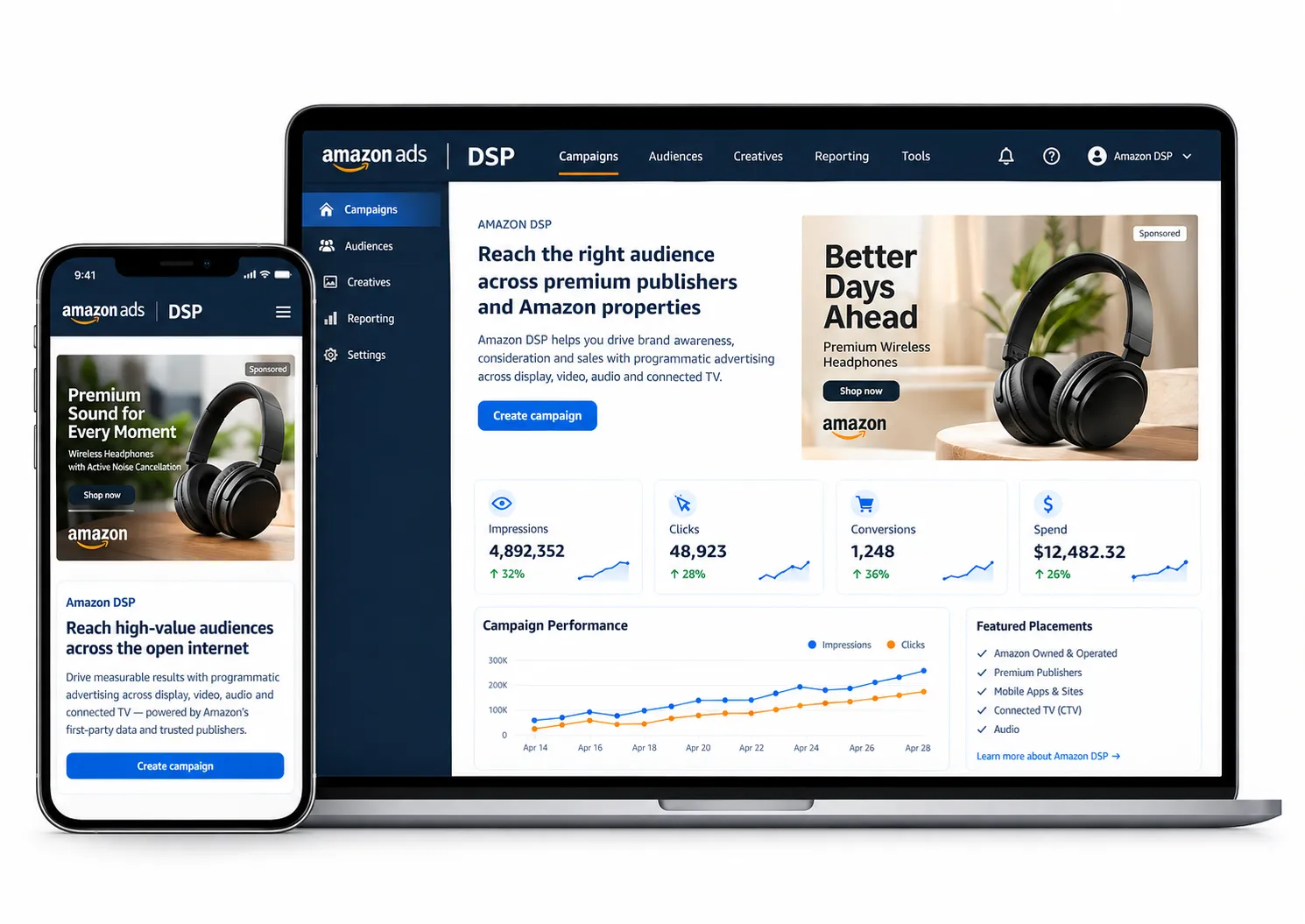
Amazon DSP, short for Amazon Demand-Side Platform, is Amazon’s programmatic advertising technology. It lets advertisers buy display, video, audio and connected TV inventory automatically, in real time, from Amazon-owned properties and from a large network of third-party publishers and apps. The words “demand side” simply mean you are on the buying side of the auction. Publishers such as news sites, streaming apps and mobile games sit on the “supply side” and sell the space where ads appear. The DSP is the software that sits between the two and decides, millisecond by millisecond, which ad to show to which person at what price.
What makes Amazon DSP different from other demand-side platforms is the data. Amazon knows what people search for, what they add to cart, what they buy, what they watch on Prime Video, what they listen to on Amazon Music and what they ask Alexa. Very few advertising platforms hold shopping and purchase signals at this scale. When you buy through Amazon DSP, you can use those signals to build audiences that reflect real buying behavior instead of guesses based on page content or loose demographics.
Amazon DSP is often described as “Amazon’s programmatic advertising solution”, and that is accurate, but it undersells the strategic value. For a brand, Amazon DSP advertising is a way to do three things that Sponsored Ads on their own cannot do well:
Amazon DSP is available to endemic advertisers (sellers and vendors who sell on Amazon) and to non-endemic advertisers (brands that sell elsewhere, such as their own website, a retail chain, an app or a service business). Endemic brands typically optimize for Amazon sales, detail page views and new-to-brand customers. Non-endemic brands optimize for site visits, leads, app installs or in-store traffic using Amazon’s audience insights. Access can be through Amazon’s self-service interface, through a managed-service arrangement with Amazon, or through an authorized agency partner. Minimum spend requirements and account eligibility differ by marketplace and by access route, so we always confirm current terms before we propose a plan.
Amazon DSP ads can appear on Amazon-owned sites and apps such as Amazon.com product and search pages, IMDb, Fire TV, Prime Video (where supported), Twitch, Amazon Music, Audible, Alexa-enabled devices and Amazon Publisher Services partners. Beyond Amazon, ads can run on thousands of third-party websites and mobile apps through Amazon Publisher Services and direct integrations with major exchanges and streaming partners. Inventory availability varies by country, so a plan for the UK looks different from a plan for the USA, UAE or India.
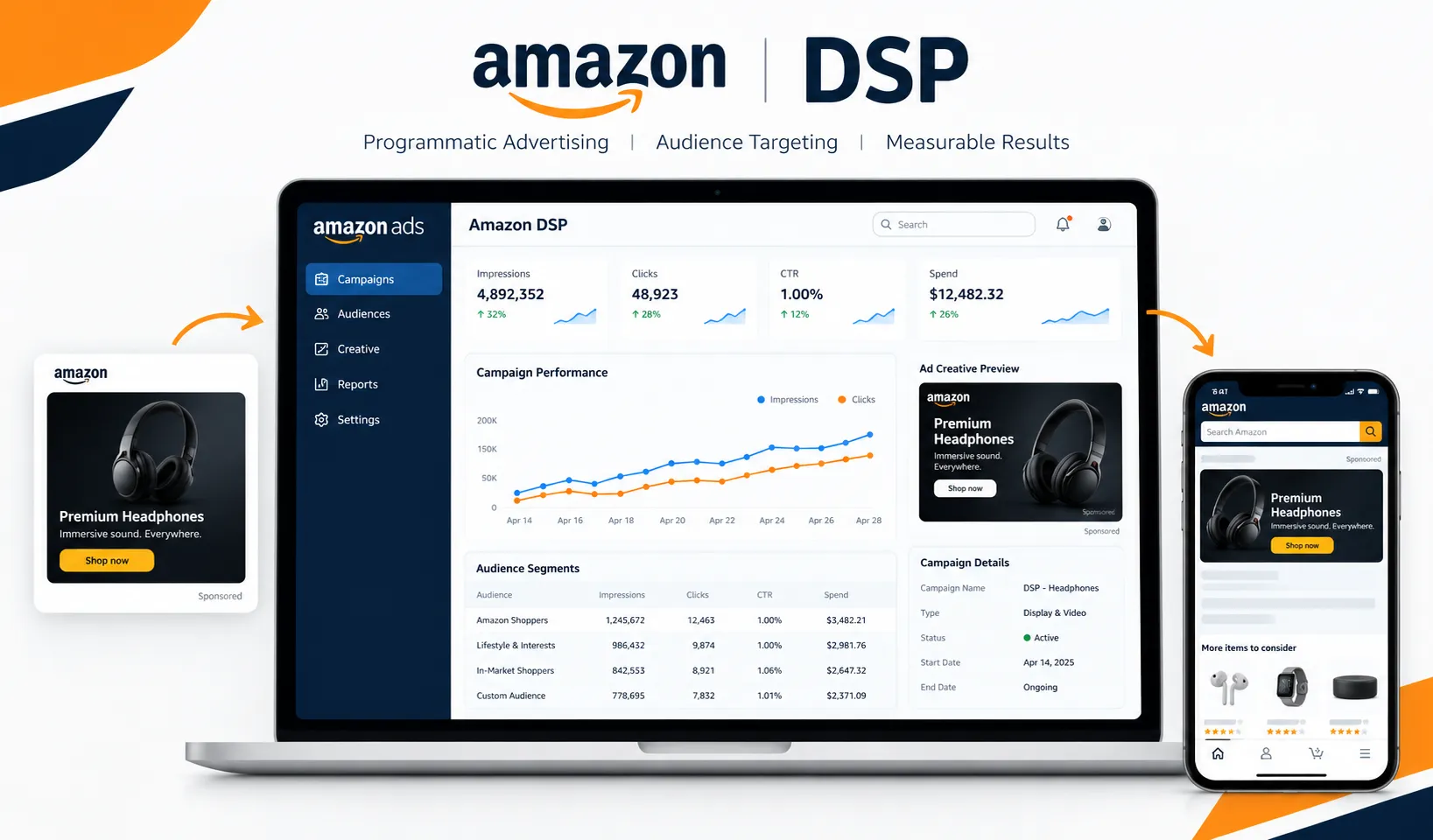
You do not need to be an ad-tech engineer to benefit from DSP, but understanding the mechanics helps you judge whether an Amazon DSP advertising agency is doing real work or just pressing buttons. Here is the simplified path of a single impression.
Everything that makes DSP profitable or wasteful happens in steps three and six. The platform automates the buying, but it does not decide your strategy. Poor audience selection, loose frequency caps, weak creative, overlapping campaigns and a fuzzy measurement plan will drain budget just as quickly in DSP as they do in any other channel. That is the reason brands hire a specialist Amazon DSP campaign optimization services partner instead of leaving the account on autopilot.
The honest answer is that mature accounts use both. They solve different problems. Sponsored Ads sit inside Amazon’s shopping experience and are driven mainly by keywords and product targets. DSP is audience-led and works across the open web, streaming and Amazon’s own placements. The table below shows how we explain the difference to new clients.
| Factor | Sponsored Ads (PPC) | Amazon DSP |
|---|---|---|
| Primary targeting | Keywords, ASINs, categories | Audiences, contextual signals, placements, lookalikes |
| Where ads appear | Amazon search and product pages | Amazon, Amazon-owned media, third-party sites, apps, streaming TV, audio |
| Funnel position | Lower to mid funnel, high intent | Upper, mid and lower funnel |
| Typical buying model | Cost per click | CPM, vCPM or optimized for conversions or reach |
| Ad formats | Sponsored Products, Brands, Brands Video, Display | Display, responsive e-commerce creative, video, streaming TV, audio, custom |
| Best for | Capturing existing demand | Creating demand, retargeting, conquesting, reaching beyond Amazon |
| Measurement | ACoS, ROAS, TACoS | ROAS, DPVR, NTB, reach, frequency, AMC path analysis |
| Learning curve | Moderate | Steep without a specialist |
A practical rule we use: if your Sponsored Ads efficiency is healthy but your branded search volume, new-to-brand share and detail page views are flat, you are harvesting demand without creating it. That is the classic signal that you are ready for DSP. If your Sponsored Ads account is a mess, with duplicated campaigns, wasted spend on irrelevant search terms and no structure, fix that first with our Amazon PPC management service. DSP will amplify whatever foundation you have, good or bad.
Brands sometimes ask how Amazon DSP compares with platforms such as The Trade Desk, Google Display & Video 360 or Meta’s ad products. Each has strengths. Amazon DSP’s edge is first-party shopping and streaming data, closed-loop measurement that ties ad exposure to Amazon purchases, and exclusive inventory such as Amazon-owned placements and certain streaming TV supply. Other platforms may offer broader third-party data partnerships or channel-specific tools. We do not treat these as either-or decisions. For many clients, Amazon DSP becomes the Amazon-focused programmatic layer in a broader media plan, and we coordinate with in-house teams or other agencies so budgets and attribution do not conflict.
Over the last decade, we have watched Amazon advertising go from a keyword auction that anyone could win with a decent listing to a crowded, expensive environment where cost per click keeps rising in most categories. When every competitor bids on the same top-of-search placements, the only sustainable response is to expand where and how you reach shoppers. These are the reasons the brands we work with add DSP.
Targeting based on what people actually did, not what a cookie guesses they might like, is the single biggest reason to use Amazon DSP ads. You can reach in-market shoppers in your category, lifestyle segments, people who viewed specific products, people who bought from competitors and people similar to your best customers. These audiences are built from observed behavior, which tends to produce more qualified traffic than generic interest targeting.
Your potential customer is not on Amazon all day. They read reviews on publisher sites, watch shows on Fire TV, listen to podcasts, check email and play mobile games. DSP lets one strategy follow them across those environments with controlled frequency and consistent messaging, which is the practical meaning of Amazon programmatic advertising.
Sponsored Display includes basic retargeting, and it is a useful starting point. DSP gives you more audience flexibility, more placement control, more creative formats, deeper frequency management and richer reporting. For brands with long consideration cycles, such as electronics, furniture, supplements and baby products, that extra control is often the difference between a retargeting program that quietly works and one that annoys shoppers.
You can reach shoppers who viewed or bought competing products and show them your offer while they are still deciding. Done well, this builds market share in categories where brand loyalty is low. Done badly, it burns money on shoppers who are never going to switch. The difference is audience quality, creative relevance and offer strength, all of which we cover in the conquest section below.
DSP lets you see the halo of your advertising. A shopper might see your video on Fire TV on Monday, click a display ad on a news site on Wednesday and buy through a branded search on Friday. Last-click reporting would credit branded search. With DSP attribution and Amazon Marketing Cloud, you can understand how the earlier touches contributed, which leads to better budget decisions across your whole Amazon media mix.
When cost per click rises, brands that rely only on search ads either accept lower margins or cut spend and lose rank. Brands that build a DSP layer can improve conversion on search traffic (because more shoppers already know them), lower reliance on expensive generic keywords and grow branded demand. This is the "flywheel" that experienced operators talk about, and it only turns when the DSP program is set up with discipline.
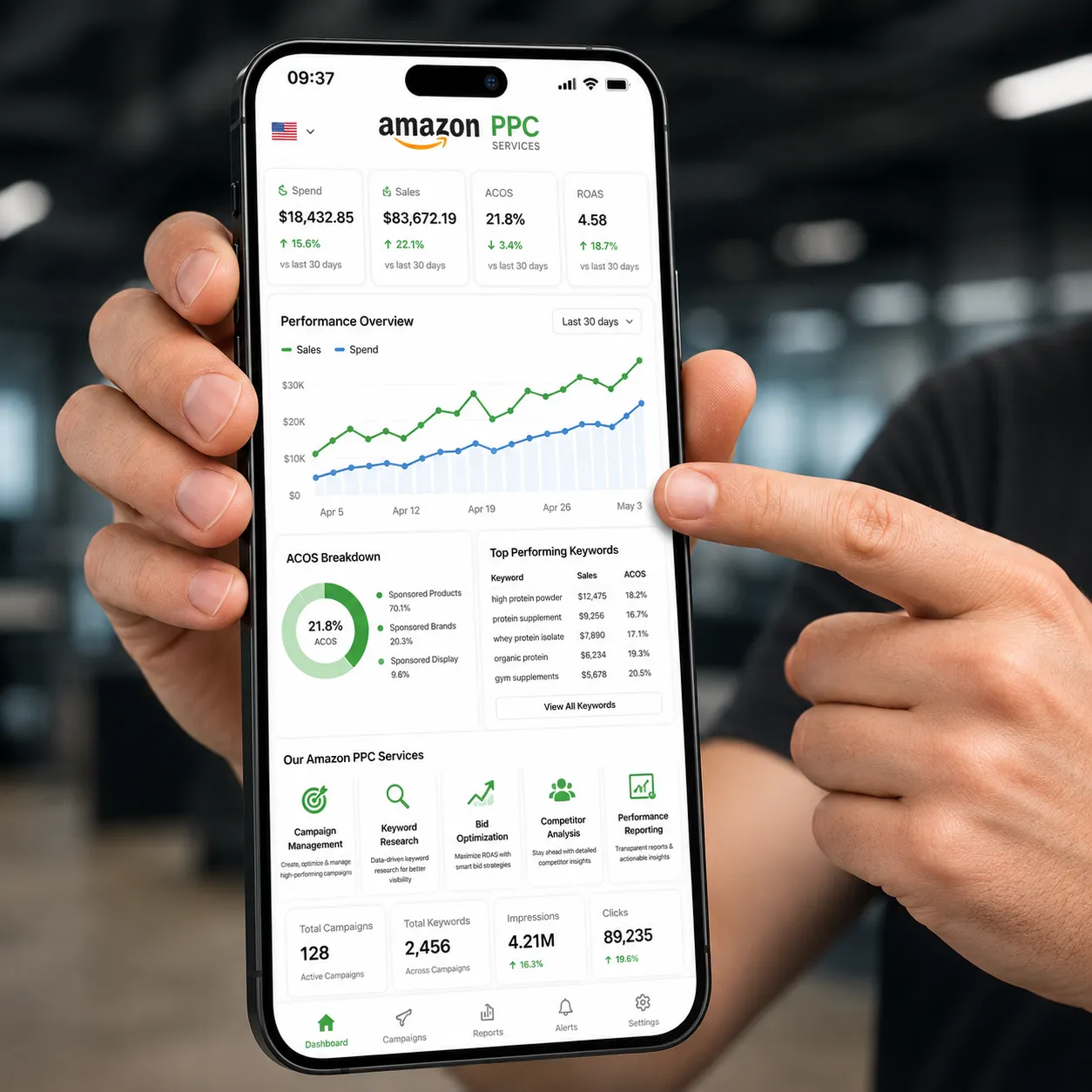
Our Amazon DSP advertising services cover everything between “we should try DSP” and “DSP is a reliable growth channel in our media mix”. We operate as a full service Amazon DSP agency, which means strategy, setup, creative, buying, optimization, measurement and reporting are handled by one accountable team instead of being split across freelancers and tools. Below is what that looks like in practice.
Every engagement starts with a plan, not a campaign. We review your catalog, margins, seasonality, current Sponsored Ads performance, brand search trends, Brand Analytics data, review profile and Buy Box health. From there we define the role DSP will play: new customer acquisition, market share capture, retention, launch support, seasonal peaks or non-Amazon conversion. The plan documents audience hypotheses, funnel stages, budget split, creative needs, KPIs and the testing roadmap. You see the plan before we spend anything.
We configure your advertiser entity, tracking and attribution settings, pixel or conversion event setup for off-Amazon goals, brand safety rules, inclusion and exclusion lists and a clear naming convention that makes reporting readable six months from now. Campaign architecture is where many accounts quietly fail: overlapping audiences compete against each other, budgets are fragmented across too many line items and nobody can tell which tactic produced which result. We build a structure that separates prospecting from retargeting, branded from conquest and always-on from promotional flights.
We build and test audience segments using Amazon’s in-market, lifestyle, interest, demographic, contextual and advertiser-owned signals. That includes your own views and purchase remarketing audiences, lookalikes of your best customers, competitor and category audiences and, where available, audiences built from your first-party data uploaded through approved routes. You can read more about our approach in the audience strategy section.
DSP gives you several bidding strategies, including optimizing for reach, for page visits, for conversions and for return on ad spend, plus manual controls. We choose the strategy that matches the campaign goal, then manage bids, pacing, dayparting, device and geography settings, frequency caps and supply sources. We watch for waste signals such as low viewability domains, apps that generate accidental clicks and placements that look cheap but never convert, and we block them quickly.
Creative is half the performance equation. Our team, together with our Amazon creative design service, produces display banners, responsive e-commerce creatives, video, streaming TV spots and audio scripts that meet Amazon’s creative acceptance policies and the technical specs for each placement. We plan creative testing like a lab: one variable at a time, a clear hypothesis, a pre-agreed success metric and a documented outcome.
We design retargeting programs by funnel depth, for example product viewers, cart abandoners, past purchasers eligible for replenishment and category browsers who never reached your detail page. Each group gets different creative, frequency, bid levels and lookback windows. See the full retargeting section.
We run conquest programs that reach shoppers viewing or purchasing competing products, with comparison-led creative and offers that justify a switch. Conquest is powerful but selective, so we approach it with careful budget caps and clear break-even math.
We use Amazon Marketing Cloud to answer the questions standard reports cannot, such as which ad combinations lead to purchases, how many touchpoints a typical buyer needs, what the overlap is between channels, and which audiences deliver incremental lift. See the AMC section for examples.
You receive a clear weekly update and a monthly strategic review. Reports connect DSP metrics to business outcomes: sales, detail page views, new-to-brand customers, ROAS, TACoS impact and branded search lift. We also explain what we changed, what we learned and what we plan to test next, in plain language.
If you already run DSP through another agency or in-house, we can audit your account and tell you honestly what is working, what is wasting money and what to fix first. An audit typically covers account structure, audience overlap, frequency, supply quality, viewability, creative performance, attribution settings, conversion definitions and reporting quality. Request a free Amazon DSP audit.
Different goals call for different formats. Our Amazon DSP campaign management services cover the formats below, and we recommend combinations based on your objective rather than pushing the most expensive option.
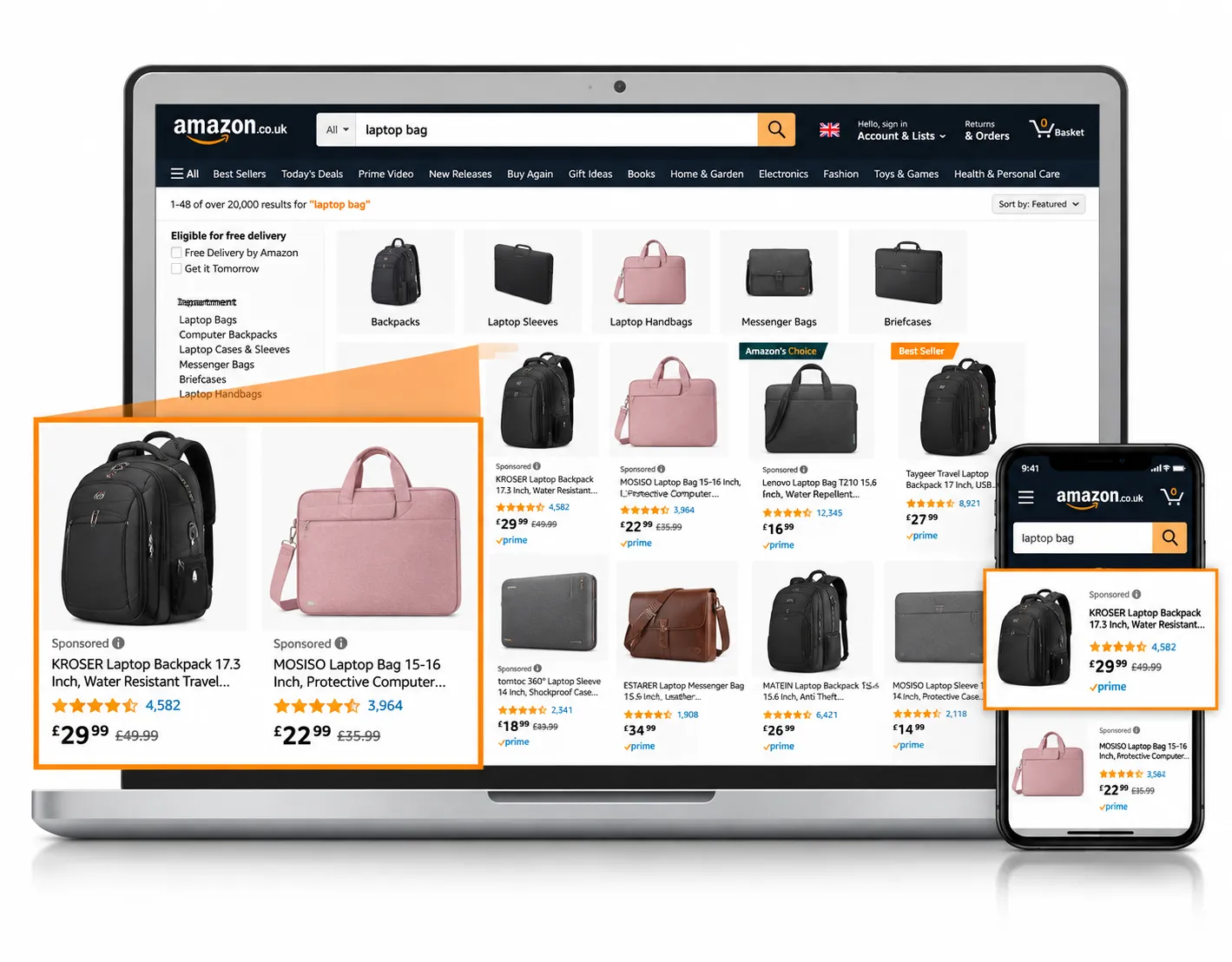
Image-based banners in standard IAB sizes served on Amazon and third-party sites. They are efficient for retargeting, brand reminders and promotions. The creative principle is simple: one message, one offer, one call to action, readable at mobile size.
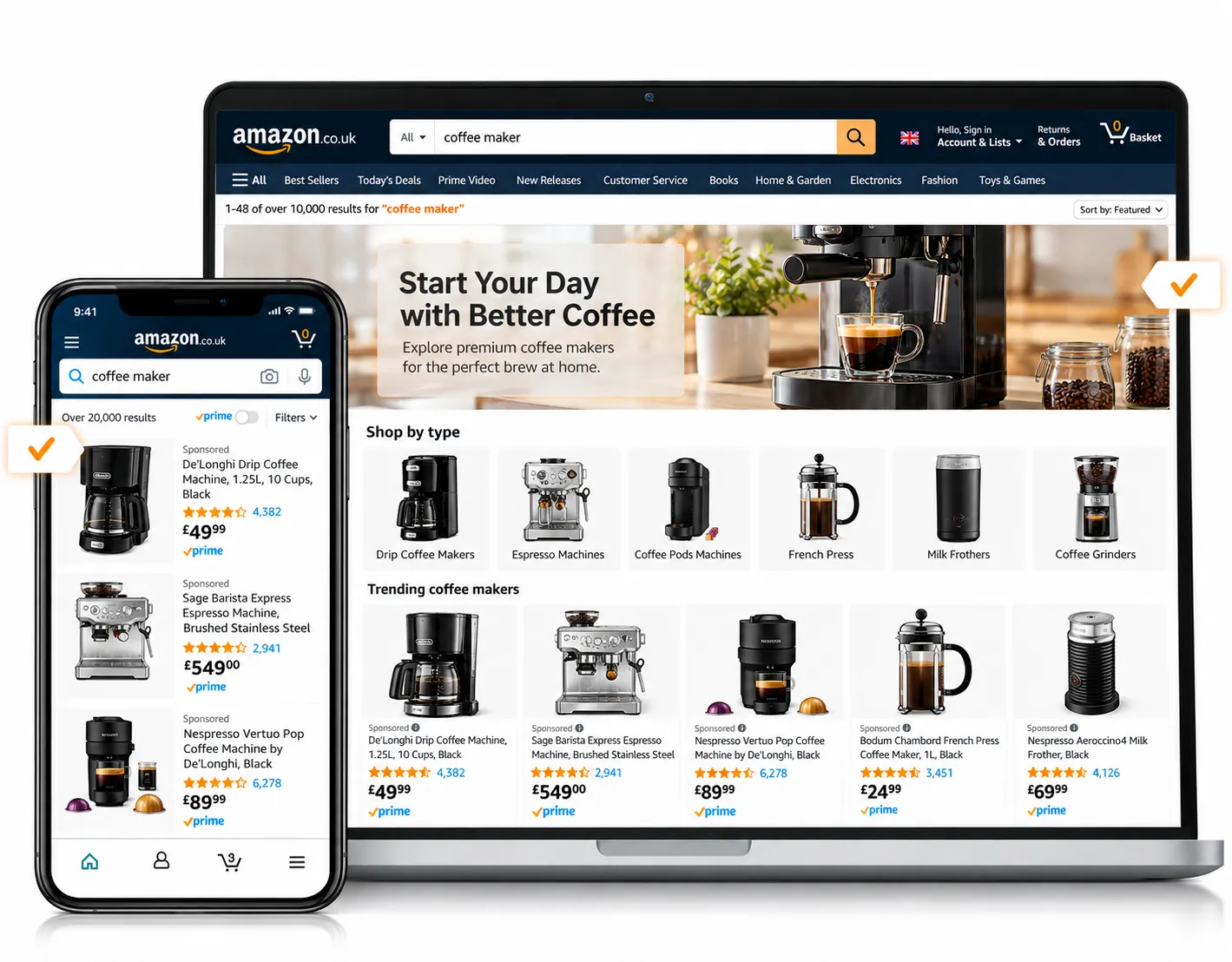
Responsive e-commerce creatives automatically assemble product imagery, pricing, ratings, a Prime badge and a “Shop now” button from your Amazon listing, then adapt to the placement size. Dynamic variants show shoppers the products they viewed or closely related items. Because the data is pulled from your listing, accuracy depends on your product listing optimization: strong images, a clear title, competitive pricing and healthy reviews improve ad performance without changing a single DSP setting.

Video ads run before, during or alongside content on Amazon properties and third-party publishers. Short formats of 15 to 30 seconds work best when the first few seconds communicate the product and the benefit. We script for sound-off viewing as well, with captions and visual cues.
Full-screen video ads on Fire TV, Prime Video where available, Twitch, IMDb TV experiences and partner streaming services. Streaming TV brings television-style brand building with digital targeting and measurement. It suits brands launching products, building category leadership or supporting seasonal peaks. Because inventory and formats vary by country, we confirm availability before planning.
Short audio spots on Amazon Music, Alexa-enabled experiences and partner podcast or streaming audio. Audio reaches people during commutes, workouts and household routines when screens are not in view. It works well for repeat-purchase categories, local campaigns and brands with a strong voice or story.
For larger brands, Amazon offers custom placements, takeovers and interactive formats. We evaluate these case by case. They can be powerful for launches and tentpole events, but they should be earned through proven results at smaller scale first.
| Objective | Formats We Typically Use | Primary KPIs |
|---|---|---|
| New product launch | Streaming TV, online video, responsive display, audio | Reach, detail page views, NTB |
| Recover abandoned interest | Dynamic display, responsive e-commerce | ROAS, purchase rate |
| Competitor conquest | Display with comparison messaging, short video | NTB, ROAS, share of voice |
| Replenishment and loyalty | Display, audio, email-aligned messages | Repeat purchase rate, LTV |
| Seasonal peaks (Prime Day, Q4) | Layered display, video, streaming TV | Sales, ROAS, share of voice |
| Non-Amazon conversion | Display, video with off-Amazon landing pages | Cost per visit, cost per acquisition |
Audience strategy is the center of Amazon DSP management. The platform offers dozens of ways to define who sees your ad. The art is knowing which ones to combine, in what order and with what budget. Below are the main audience families we work with.
People actively researching or shopping for products in a category, built from recent browsing and purchase signals. In-market audiences are the workhorse of prospecting because they sit close to the purchase decision. We layer them with exclusions of existing customers when the goal is new-to-brand growth.
Groups based on long-term interests, hobbies and life stages, such as fitness enthusiasts, new parents, home cooks or outdoor adventurers. They are broader and less immediate than in-market segments, which makes them suitable for brand awareness and for categories with long consideration cycles.
Age, gender, household composition and income bands. We rarely use demographics alone, because they are blunt, but they are helpful as filters on top of stronger behavioral segments.
Audiences built from people who viewed your detail pages, brand store or ads, and from people who purchased. These are your highest-value segments for efficiency but they are limited in size, so we balance them with prospecting to keep the funnel full.
Segments modeled to resemble your purchasers or high-value customers. Lookalikes help you expand beyond small seed audiences while keeping quality reasonably high. We test multiple lookalike expansion levels and watch for diminishing returns.
Shoppers who viewed or purchased similar or competing ASINs. We build these around specific ASIN sets, categories, price tiers and feature clusters rather than a single massive “competitors” bucket, which keeps messaging relevant.
Targeting based on page content, topics and keywords rather than personal signals. Contextual targeting is increasingly valuable as privacy rules tighten, and it is a good way to reach the right mindset, for example placing a kitchen product ad beside recipe content.
Where eligible, you can bring your own customer data, such as email lists, through privacy-compliant routes to create custom audiences or exclusions. We help you prepare and govern this data properly, because privacy compliance is not optional.
We design audience stacks by funnel stage. A typical structure looks like this:
Budgets move between layers based on measured contribution, not on guesswork. If upper-funnel campaigns increase branded search and detail page views at an acceptable cost, we scale them. If they only inflate impressions, we cut them.
Most shoppers do not buy on the first visit. Industry experience across categories shows that the majority of product page visitors leave without purchasing, even when they like the product. Amazon DSP retargeting exists to bring those visitors back at the right time, with the right message, without spending more than the order is worth.
For non-endemic brands, retargeting can be set up around website visitors, app users and landing page engagement through supported pixel or conversion integrations. For endemic brands, off-Amazon placements extend your retargeting reach onto publisher sites and apps where shoppers spend their time after leaving Amazon.
Conquesting means advertising to shoppers who are already looking at, or have bought, a competitor’s product. These shoppers are in the buying mindset, which makes them far more valuable than a cold audience, but they are also loyal to a competing listing for specific reasons. A conquest campaign succeeds only if you give them a better reason.
Conquesting works both ways. Competitors can target your shoppers. We use DSP and Sponsored Display to defend high-value ASINs, protect branded demand and reduce the chance of losing conversion on your own traffic. Our Amazon account management team coordinates defensive coverage across ad types.

Amazon Marketing Cloud is a secure analytics environment where advertisers can analyze campaign exposure and shopping events together without seeing individual user identities. For DSP, AMC turns “we spent X and got Y” into “here is how shoppers actually moved from exposure to purchase and which combinations of ads mattered”.
No single report tells the whole story. We combine DSP console metrics, Amazon attribution, Brand Analytics, Sponsored Ads data, retail metrics and AMC findings into one view. Where relevant we also compare spend periods against baseline periods or run geo or audience holdout tests to estimate incremental lift. Attribution windows matter, so we document the window, the metric definition and the conversion type in every report, so numbers are comparable month to month.
Because AMC access, features and pricing change, we confirm current eligibility and costs with you before proposing AMC-based work.
After a decade of running paid media on Amazon, we have learned that the process matters more than any individual tactic. Our Amazon DSP campaign management workflow has five stages. It is the same whether you spend a modest amount or a very large one, only the pace and depth change.
Many DSP accounts stagnate because teams change five things at once and cannot tell what worked. We test sequentially. Each test has a hypothesis, a primary metric, a minimum sample, a duration and a pre-agreed decision rule. Winners are scaled, losers are documented, and the learning becomes part of a performance playbook specific to your brand. Over time, that playbook is a real asset that makes every future campaign faster and cheaper to launch.
The most profitable Amazon accounts treat advertising as a connected system. DSP is not a replacement for Sponsored Ads; it feeds them and benefits from them. Here is how we align the layers.
| Funnel Stage | Goal | Primary Tools | Supporting Metrics |
|---|---|---|---|
| Awareness | Introduce the brand to new audiences | DSP streaming TV, video, audio, prospecting display; Sponsored Brands Video | Reach, frequency, DPVR, branded search lift |
| Consideration | Convince shoppers your product fits their need | DSP in-market and competitor audiences; Sponsored Brands; Brand Store | Detail page views, add-to-cart rate, NTB |
| Conversion | Win the order | Sponsored Products; Sponsored Display; DSP retargeting | ROAS, ACoS, conversion rate |
| Retention | Drive repeat purchase and loyalty | DSP purchaser audiences; Sponsored Display; email and Subscribe & Save | Repeat rate, LTV, TACoS |
DSP drives traffic. Your listing converts it. If your images are weak, your title is confusing or your price is out of line, you are paying to send shoppers to a page that loses them. Before scaling DSP spend we recommend a review of your listing through our listing optimization and Amazon SEO services. Better organic ranking also reduces dependence on paid placements, which improves TACoS, the total advertising cost of sales that tells you whether ads are building a healthy business or only buying sales.
There is no universal ratio. As a starting hypothesis, many brands keep most advertising spend in Sponsored Ads and allocate a measured share to DSP for testing, then increase DSP once efficiency and NTB growth are proven. The right allocation depends on your category, margins, competition, catalog size and maturity. We model scenarios rather than quote a one-size-fits-all percentage.

Targeting gets your ad in front of the right person. Creative decides whether they care. Poor creative is the most common hidden cause of weak DSP results. Our creative approach combines performance data, Amazon policy knowledge and basic persuasion principles.
Streaming TV and video need a story arc even in 15 seconds: hook, problem, product, proof, call to action. We script for sound-off viewing, brand the first three seconds, and keep logo placement clear without overpowering the product. For audio, we write for the ear: short sentences, one memorable line, one clear next step.
Amazon reviews DSP creatives against its advertising policies. Common reasons for rejection include unsupported claims, misleading pricing, restricted category language, low-quality imagery, missing disclosures and trademark issues. We check creatives against current policy before submission to avoid launch delays, and we handle revisions quickly when Amazon requests changes. Work with our creative design team to build a library of compliant, tested assets.
“How much does Amazon DSP cost?” is one of the first questions we hear, and the honest answer has two parts: what Amazon requires, and what you should spend to get meaningful learning.
Amazon sets minimum spend and fee structures that depend on access route, region and program rules, and these terms have changed over time. Agencies and managed-service routes often have different thresholds from self-service access. We never quote outdated numbers. During discovery, we confirm the current minimums, platform fees and billing terms for your marketplace (such as the USA, UK, UAE or India) and put them in writing.
Our management fees are typically structured as a percentage of media spend, a flat monthly retainer, a hybrid or a project fee for audits and setup, depending on scope. We explain the model, what it includes and how it scales before you sign. If you want to compare proposals, ask every agency whether fees cover creative production, AMC analysis, reporting and strategy time, or whether those are extras.
A test budget should be large enough to produce statistically useful data across your main audience segments and long enough to cover your typical consideration cycle. Starting too small leads to inconclusive tests and premature judgments. We help you set a budget that supports learning while protecting cash flow, and we define in advance what results would justify increasing it.
Good reporting begins with choosing metrics that match the objective. Mixing awareness and conversion metrics in a single scorecard is how teams end up judging a video campaign by last-click ROAS or judging retargeting by reach. We separate them clearly.
| Metric | What It Tells You | Best Used For |
|---|---|---|
| Impressions and reach | How many ads and unique people were exposed | Awareness, streaming TV, audio |
| Average frequency | How often each person saw the ad | Preventing fatigue and waste |
| Viewability rate | Share of impressions that could be seen | Supply quality |
| Video completion rate | Share of viewers who watched to the end | Video creative strength |
| Click-through rate (CTR) | How compelling the ad was to click | Creative testing, retargeting |
| Detail page view rate (DPVR) | How many exposed shoppers visited your product page | Upper and mid funnel |
| Add-to-cart rate | Purchase intent signal | Mid funnel |
| Purchase rate and units sold | Conversions attributed to DSP | Lower funnel |
| Return on ad spend (ROAS) | Attributed sales divided by ad spend | Efficiency |
| New-to-brand sales and rate | Share of orders from new customers | Growth quality |
| Cost per detail page view | Cost to drive consideration | Comparing audiences |
| Total ACoS and TACoS impact | Effect on overall advertising cost of sales | Profitability across channels |
| Branded search lift | Change in brand-name searches during campaigns | Brand building |
| Customer lifetime value (CLV) | Value of acquired customers over time | Judging NTB campaigns fairly |
| Repeat purchase rate and average order value | Retention and basket quality | Loyalty and cross-sell |
ROAS is useful but incomplete. An upper-funnel campaign may show a modest ROAS in the first window while creating future demand. A conquest campaign may show a lower ROAS and a higher new-to-brand share. We agree on the primary KPI for each campaign before launch and report it alongside efficiency guardrails. That avoids the “turn off everything that is not retargeting” trap that quietly shrinks a brand’s reach.
Amazon advertising is not identical in every country. Supply sources, available formats, audience signals, privacy rules, creative policies, currencies, buying seasons and access routes differ. Because we manage Amazon advertising across the USA, UK, UAE and India, we plan DSP in a way that respects those differences instead of copying a US playbook everywhere.

The most mature DSP market, with the widest inventory, the deepest audience options and the most streaming TV supply. Competition is strong, so creative and audience precision matter. Peak seasons such as Prime Day, Back to School and Q4 require early budget planning, because auction pressure rises fast.

A strong market for vendors and brands with established retail presence. Inventory includes Amazon-owned placements and UK publisher partners, with attention to GDPR-style privacy expectations and UK advertising standards. Seasonal events and cultural calendars differ from the US, and we plan accordingly.

A fast-growing market where Amazon.ae and regional shopping behavior are evolving quickly. Language (English and Arabic), delivery expectations, payment methods and seasonal events such as Ramadan, White Friday and regional shopping festivals shape creative and timing.

A high-volume, price-sensitive and mobile-led market. Availability of DSP features can differ from other regions, and festive seasons drive large demand swings. We confirm access routes, formats and minimums locally before planning and keep expectations realistic where inventory is more limited.
Seasonal peaks are where DSP can create or destroy margin. Prices of impressions rise, competition intensifies and shoppers move quickly. We plan peak campaigns in three phases.
Build and refresh audiences, grow the retargeting pool with prospecting and video, test creative variations and confirm inventory depth. Most brands start too late and pay peak prices for cold audiences.
Raise budgets for proven audiences, tighten frequency, switch creative to offer-led messages, and protect branded and hero ASIN placements. Daily or intra-day checks matter during the event. We also coordinate with Sponsored Ads so total spend stays aligned with stock levels and promotions.
Retarget peak visitors who did not buy, cross-sell to new customers, and review what the event taught you for next year. Post-event AMC analysis is especially valuable, because it reveals which exposures contributed to peak purchases.
Amazon DSP is not for everyone, and a trustworthy agency should tell you when it is too early. These are the profiles where we see the strongest fit.
Your ACoS is acceptable, but growth has stalled. Branded searches, new-to-brand share and detail page views are flat. DSP adds new audiences and new placements.
Launches need awareness quickly. Streaming TV, video and prospecting display create the demand that search ads later capture.
Vendor Central brands often have retail margins and catalog depth that support upper-funnel investment. DSP helps defend share against competitors and supports retail promotions.
When search auctions are expensive, DSP offers alternative paths to the same customers with different cost structures.
If you sell on your own site, in retail or through services, you can use Amazon's audience insights to reach shoppers and drive traffic to your own conversion points.
If your internal team lacks time or DSP expertise, we can act as your managed Amazon DSP partner or as a white-label specialist behind the scenes.
In those cases, we will recommend fixing the foundation with PPC management, listing optimization or account management first. It is better to lose a sale of our services than to waste your budget.
When we audit existing DSP accounts, the same issues appear repeatedly. If you are managing DSP yourself or evaluating another provider, check for these.
The market is crowded with agencies that claim DSP expertise. Use these questions to separate genuine operators from resellers.
We welcome these questions. Send them to us through our contact page and we will answer in writing.
Amazon PPC Expert is a specialist Amazon advertising agency focused on profitable growth. Our leadership team has more than ten years of experience in Amazon marketplaces, including PPC, listing optimization, SEO, account management, creative and programmatic advertising. Our founder and chief growth strategist, built our approach on a simple idea: advertising must be accountable to profit, not to vanity metrics.
DSP performs best when the rest of your Amazon presence is healthy. These services work together with our DSP management.
Sponsored Products, Sponsored Brands and Sponsored Display campaigns built for profitable growth. Strong PPC captures the demand DSP creates and supplies the data that informs DSP audiences.
Titles, bullets, images, A+ Content and backend terms that raise conversion rate. Better listings increase DSP efficiency because more of the traffic you pay for turns into orders.
Keyword research, indexing and ranking strategy that improve organic visibility. Organic strength lowers TACoS and makes your advertising budget go further.
Inventory, pricing, Buy Box, catalog health and operations support that keep ad traffic landing on products that can actually sell.
Main images, infographics, A+ Content, Brand Stores and ad creative. Consistent visual identity improves recognition across Amazon and the web.
Many marketers are surprised to learn that you do not need to be an Amazon seller to advertise through Amazon DSP. Non-endemic advertisers include direct-to-consumer brands, retail chains, financial services, travel, telecommunications, automotive, education, software and consumer packaged goods companies that sell primarily elsewhere.
The appeal is access to shopping-based signals at scale. A mattress brand can reach people researching sleep products. A travel brand can reach people who frequently buy luggage. A financial brand can reach households with life-stage signals that suggest relevant needs. This level of behavioral insight is harder to get from audiences defined only by site content or demographics.
Every account is different, but a typical first quarter with us follows this shape. We share an exact version with each client after the audit.
At the end of 90 days you should know three things clearly: what DSP contributes to your business, which audiences and creatives deserve more budget, and what the next quarter’s plan is. If DSP is not contributing, we say so and recommend what to change or stop.
Programmatic advertising operates in a changing privacy environment. Regulations such as GDPR and UK GDPR in Europe, state privacy laws in the United States and local rules in the UAE and India shape how data may be collected and used. Amazon builds privacy controls into its tools, and we add our own governance on top.
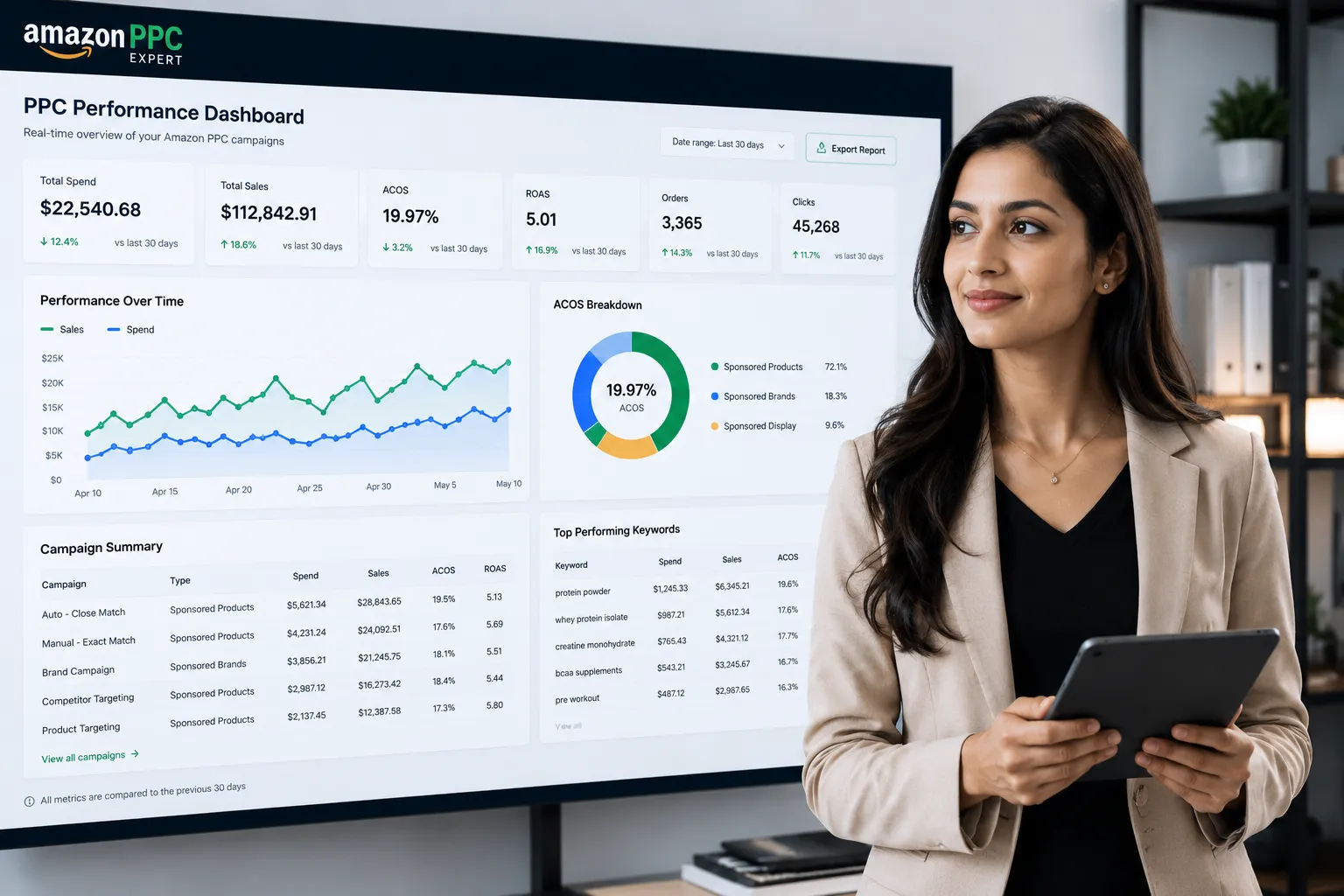
Amazon DSP is Amazon's demand-side platform for programmatic advertising. It lets advertisers buy display, video, audio and streaming TV ads automatically across Amazon-owned properties and third-party sites and apps. Ads are bought in real-time auctions, targeted using Amazon's shopping, streaming and contextual signals, and measured using Amazon's attribution and analytics tools.
An Amazon DSP agency plans strategy, sets up your account, builds audiences, develops creative, manages bids and budgets, monitors supply quality, tests variations, reports performance and recommends improvements. A full service Amazon DSP agency also connects DSP to your Sponsored Ads, listing quality and measurement so the whole Amazon program works together.
Cost has two parts: the media you buy and the management fee. Amazon sets minimums and platform fees that vary by region and access route, and these change over time. Management fees vary by scope. We confirm current terms for your marketplace during discovery and give you a written estimate before starting.
Yes, minimum spend requirements usually apply, and they can differ between self-service, managed-service and agency routes and between marketplaces. Because these numbers change, we verify the latest requirements with Amazon at the time of your proposal rather than quoting figures that may be outdated.
Yes. Non-endemic advertisers can use Amazon DSP to reach audiences based on Amazon's shopping and streaming signals and send them to their own website, app or store. Measurement and optimization options differ from endemic campaigns, and we plan around those differences.
Sponsored Ads appear in Amazon's shopping experience and are driven mainly by keywords and product targeting, so they capture existing demand. Amazon DSP is audience-led and reaches shoppers on and off Amazon, so it can create demand, retarget visitors and capture competitor audiences. Most successful brands use both.
It can be, if you have healthy listings, reliable inventory, adequate margins and a budget large enough to test properly. For brands that are not ready, we recommend building the foundation with PPC and listing work first. We will tell you honestly which stage you are at.
Early indicators such as reach, click-through rate and detail page views appear within the first few weeks. Retargeting often shows conversion results sooner. Prospecting and upper-funnel campaigns typically need a longer window to demonstrate impact on new-to-brand sales and branded search. We set expectations by campaign type before launch.
Retargeting shows ads to shoppers who previously viewed your products, added them to cart or purchased, on and off Amazon. Segments are separated by intent and recency, with tailored creative and frequency caps to bring people back without overspending.
You can build audiences of shoppers who viewed or purchased similar or competing products and show them your offer. Results depend on audience quality, creative relevance and the real advantage of your product. We use budget caps and track new-to-brand growth to confirm it pays off.
Common formats include static and responsive display, dynamic e-commerce ads, online video, streaming TV (OTT and CTV), audio and custom placements. Availability varies by country and by account type.
We track metrics matched to each campaign goal: reach and frequency for awareness, detail page view rate and add-to-cart rate for consideration, ROAS and purchase rate for conversion, and new-to-brand sales and customer lifetime value for growth quality. We also use Amazon Marketing Cloud for deeper path-to-purchase analysis where available.
Amazon Marketing Cloud (AMC) is a privacy-safe analytics environment for analyzing ad exposure and shopping behavior. You do not need it to start DSP, but it becomes valuable as spend grows, because it reveals paths to purchase, channel overlap and incremental impact.
Yes. Our audit reviews structure, audiences, supply, frequency, creative, attribution and reporting, then gives you a prioritized action plan. You can request a free audit here.
Yes. You keep ownership of your advertiser entity, audiences, creatives and performance data. We work inside your accounts or under agreed access and share full reporting with you.
You receive regular updates on a weekly basis and a monthly strategy review. During peak events we increase check-in frequency. You also have a direct line to your strategist.
Contract terms depend on scope, and DSP needs enough time to learn and optimize, so we recommend a minimum evaluation period. We discuss terms openly and put everything in writing before you commit.